A Century of Mechanical Marvels: From Horses to Horsepower
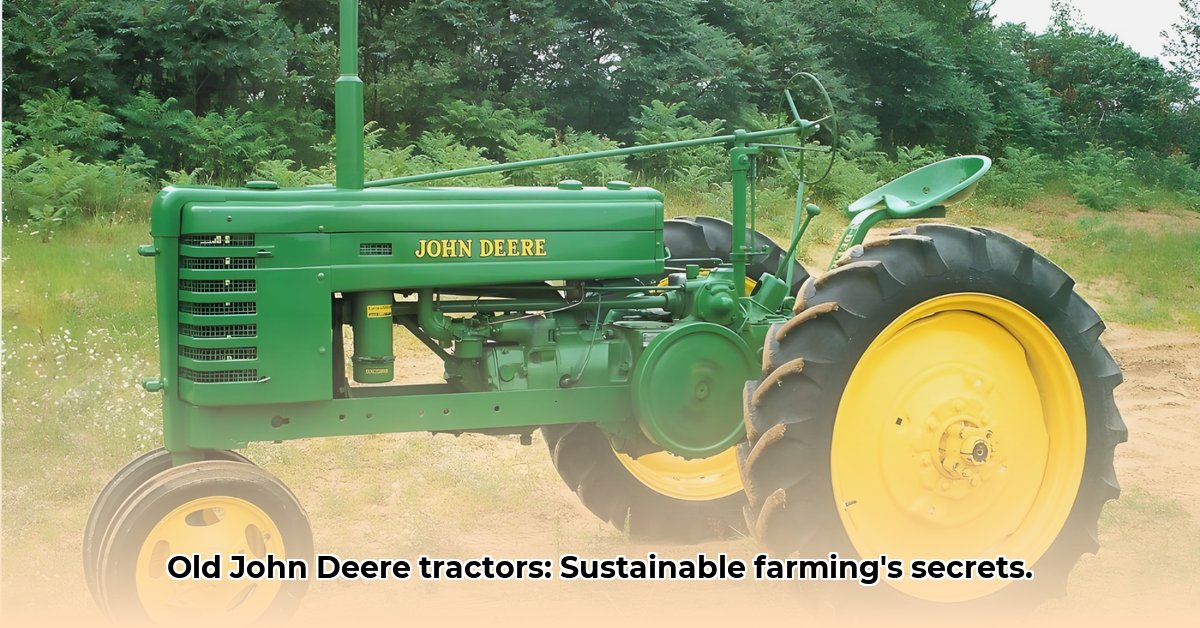
The story of John Deere tractors is inextricably linked to the evolution of farming practices. Beginning with the revolutionary steel plow of 1837, John Deere's innovations dramatically reshaped agriculture. The transition from animal power to internal combustion engines, epitomized by the roar of the first diesel engine, marked a pivotal moment. This shift significantly boosted productivity and reduced reliance on draft animals. The introduction of the power take-off (PTO) further expanded tractor capabilities, allowing them to power a diverse array of implements beyond simple plowing. Specialized models emerged, tailored for various crops, transforming the agricultural landscape. Iconic models like the Model D cemented John Deere's legacy of robust, long-lasting machinery. But how did this mechanization impact sustainability? For more on maintaining these machines, see our guide on tractor maintenance.
How did the increased efficiency of early John Deere tractors affect the overall yield of crops? While historical data is limited in terms of precise yield increases, the reduction in labor and the ability to cultivate larger areas certainly led to substantial growth in crop production.
The Price of Progress: Fuel, Soil, and the Environment
The mechanization of agriculture, while undeniably transformative, wasn't without consequences. The widespread adoption of tractors brought with it a dependence on fossil fuels. While early adopters didn't necessarily consider fuel efficiency or emissions, today's focus on sustainable agriculture requires a critical retrospective. What were the long-term effects of early tractors on soil health? Did widespread tractor use contribute to soil compaction or erosion? These questions demand thorough investigation, requiring comprehensive life-cycle analyses (LCA) of each tractor generation to fully understand their environmental impact. Such analyses are crucial to inform future sustainable practices.
"The widespread adoption of tractors significantly altered soil dynamics, increasing compaction in many cases," says Dr. Emily Carter, Professor of Environmental Science, University of California, Berkeley. "This is something we need to study in the context of sustainable agriculture."
The Modern Challenge: Sustainability and the Future of Farming
Modern agriculture faces unprecedented challenges: climate change, resource scarcity, and a growing global population exert immense pressure on food systems. John Deere, a historical symbol of mechanization, now confronts a critical transformation. The company, along with the broader agricultural industry, must navigate a shift towards more sustainable practices. This entails designing and manufacturing machines that minimize their environmental footprint, reducing fuel consumption and emissions. This represents a delicate balance: maintaining high productivity to feed the world while upholding environmental stewardship.
What percentage of current John Deere research and development is dedicated to sustainable farming technologies? While precise figures aren't publicly available, John Deere's public statements and investments in electric and alternative fuel technologies strongly suggest a substantial portion of their R&D is now focused on sustainability.
What the Future Holds: New Fuels and Smart Farming
The pursuit of sustainable agriculture is driving remarkable innovation. Research into alternative fuels—biofuels, hydrogen, and electric power—is yielding promising results. Simultaneously, precision agriculture, employing technology to optimize resource use, is gaining traction. John Deere’s challenge—and the challenge for the entire industry—is to create agricultural machinery that's both productive and environmentally responsible. This complex endeavor is essential for building a more secure and sustainable food system.
Considering All Sides: Perspectives and Responsibilities
The transition to sustainable agriculture necessitates a collaborative effort. Farmers, manufacturers, policymakers, and consumers all play vital roles. A shared understanding of individual goals is crucial:
| Stakeholder Group | Short-Term Goals (0-1 Year) | Long-Term Goals (3-5 Years) |
|---|---|---|
| Farmers | Improve fuel efficiency, reduce soil compaction. | Embrace precision technologies, explore alternative fuels where possible. |
| John Deere & Competitors | Develop more fuel-efficient models, reduce emissions. | Invest heavily in alternative fuel research and sustainable manufacturing. |
| Policy Makers/Regulators | Introduce incentives for sustainable farming practices. | Enact stricter environmental standards, fund research into sustainable agricultural tech. |
| Consumers | Support farmers adopting sustainable practices through purchasing choices. | Demand transparency about food production's environmental impact. |
How to Reduce Tractor Emissions in Sustainable Farming
Key Takeaways:
- John Deere's commitment to sustainability includes investments in electric and hybrid tractors, precision agriculture, and renewable energy.
- Significant challenges remain in fully transitioning to electric agricultural machinery and achieving complete decarbonization.
- Farmers, governments, and investors all play critical roles in accelerating the adoption of sustainable farming practices and technologies.
The Green Evolution of the John Deere: A Legacy Redefined
The shift from the rumble of vintage John Deere tractors to the quiet hum of electric motors represents a fundamental change in agriculture. While these machines have long powered food production, their reliance on internal combustion engines has resulted in significant greenhouse gas emissions. Reducing emissions is no longer optional; it's a paramount necessity.
John Deere's investments in electric and hybrid models demonstrate their commitment to sustainability. However, this transition isn't straightforward. It necessitates technological advancement, infrastructure development, and widespread farmer adoption.
Precision Farming: Doing More With Less
Precision agriculture, with technologies like John Deere's See & Spray™, optimizes resource use. By targeting pesticide and fertilizer application only where needed, it minimizes waste and environmental impact. Less fuel consumption translates directly to reduced emissions. However, equitable access to this technology is a major hurdle, requiring financial incentives and policy support.
The Power of Partnership: Collaboration for a Greener Future
Sustainable farming requires collaboration among stakeholders. John Deere's partnership with farmers, governments, and research institutions exemplifies this essential approach. Government policies, funding, and regulations are crucial to accelerating the adoption of sustainable practices and technologies. Support for farmers during this transition will ensure broad-based impact.
Challenges and Opportunities: The Road Ahead
Despite progress, challenges remain. The high upfront cost of electric tractors, limited rural charging infrastructure, and the potential for increased reliance on fossil fuel-generated electricity need to be addressed. Long-term sustainability, including machine lifespan and end-of-life management, demand further research.
Steps Towards a Sustainable Future: A Practical Guide
- Assess your operations: Identify your farm's primary emission sources.
- Invest in precision agriculture: Optimize fertilizer and pesticide application.
- Explore alternative fuels: Consider biofuels, renewable diesel, electric, or hybrid tractors.
- Implement sustainable practices: Adopt no-till farming, cover cropping, and crop rotation.
- Advocate for policy changes: Support government initiatives promoting sustainable agriculture.
The story of John Deere tractors reflects the ongoing evolution of farming and our shared responsibility in shaping its future. The challenge lies in balancing efficient food production with environmental protection, a crucial step toward a sustainable global food system.